 Wakey
Wakey
How-to
How to Stop Hitting Snooze: 8 Fixes That Actually Work
Snoozing isn’t a willpower failure. It’s a negotiation you lose half-asleep, and every fix here takes the decision away from that version of you.
If you want to know how to stop hitting snooze, the short answer is this: stop asking the half-asleep you to make the call. Snooze wins because the choice arrives when you’re groggy, warm and very persuadable. The fixes that work move the decision earlier: to last night, to your bedroom layout, to the alarm itself. Here are eight, each with one thing to try tonight. Pick two or three. Done every day, they beat all eight done on Monday.
Why snooze wins at 6 AM
At night, 6:30 feels reasonable. At 6:30, it feels like a proposal from someone who has never met this pillow. That’s not laziness. It’s timing.
The first minutes after waking come with sleep inertia, which the CDC’s NIOSH describes as a temporary dip in orientation, performance and mood. It typically lasts 30 to 60 minutes, longer if you’re short on sleep. That’s exactly when the snooze button asks you to decide.
Is snoozing bad for you? The research is mixed. A 2023 Stockholm University study surveyed 1,732 people and found snoozing widespread, especially among younger people and evening types. In the lab, 30 minutes of snoozing cost 31 habitual snoozers about six minutes of sleep but didn’t clearly change their mood or morning cortisol, and their test scores were the same or slightly better. The researchers stress it only covered regular snoozers who fall back asleep easily. A smaller 2022 lab study of 10 students in Japan found a snooze alarm made grogginess last longer than a single alarm.
So snooze isn’t poison. This post is for when it costs you something you care about: the gym slot, the first lecture, the quiet half hour. The goal is to decide once, while you mean it. For the long game, see how to wake up early consistently.
How to stop hitting snooze: the 8 fixes at a glance
| Fix | What it takes away | Effort tonight |
|---|---|---|
| 1. Phone across the room | Reaching the button without standing | Two minutes |
| 2. One wake time | Deciding what time “counts” today | One decision |
| 3. Decide the night before | The morning debate | Five minutes |
| 4. Stopping needs you awake | Dismissing on autopilot | Depends on your alarm |
| 5. No snooze at all | The one-tap delay | A setting, or a different alarm |
| 6. A reason to get up | “Why bother?” | Five minutes |
| 7. A streak | Treating one lie-in as free | A calendar and a pen |
| 8. Bedtime from wake time | Starting the day short on sleep | Some arithmetic |
01Put your phone across the room
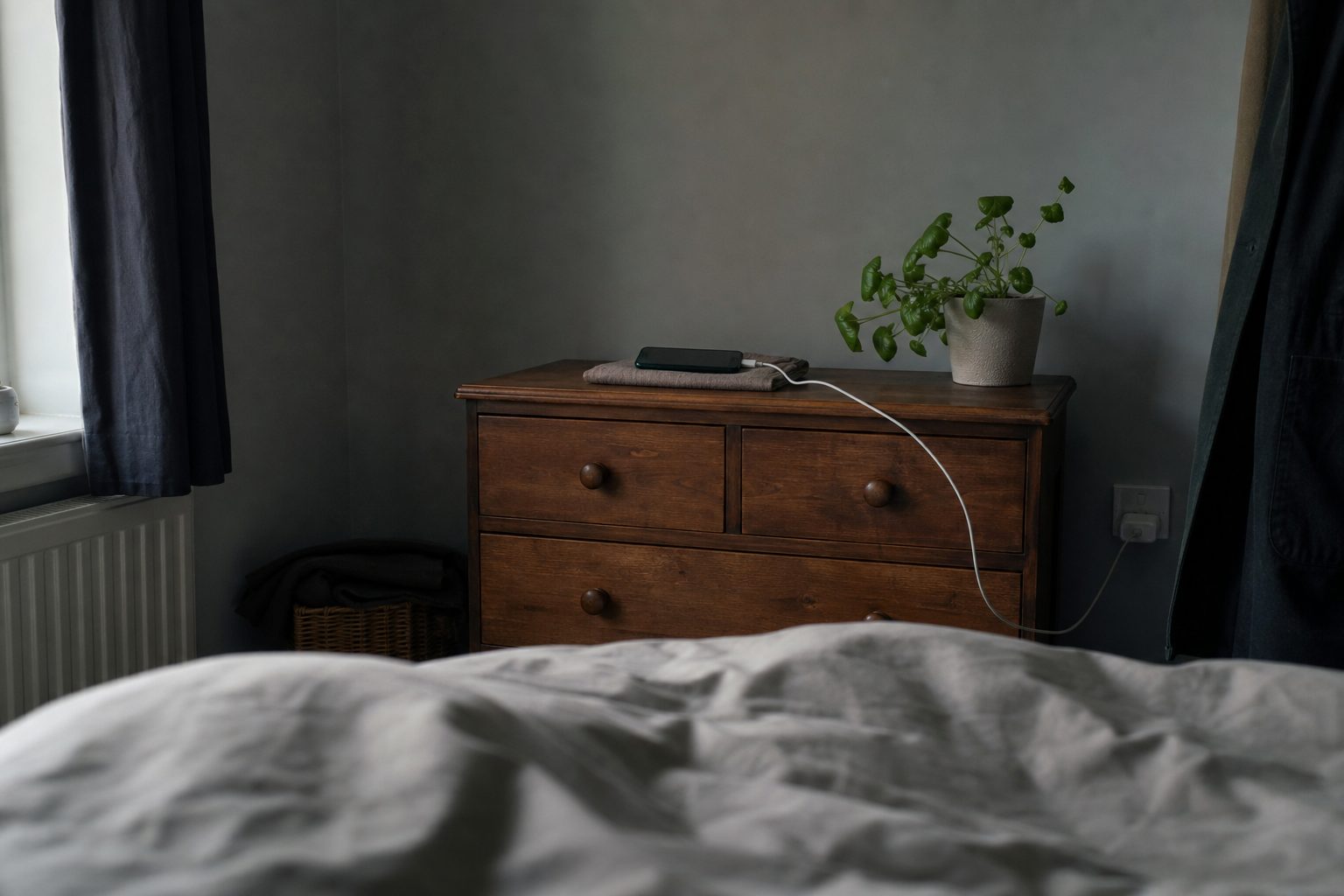
If the alarm is out of arm’s reach, turning it off means standing up, and standing up is most of the battle. Charge your phone on a dresser or just outside the door. Bonus: a phone you can’t reach is one you’re not scrolling at midnight, and the CDC’s sleep tips include turning devices off at least 30 minutes before bed.
The weakness: you can walk back to bed. Fixes 4 and 5 close that gap.
Try tonight Charge your phone somewhere you have to get up to reach, and keep the bedside table boring.
02Pick one wake time and keep it
If your wake time moves daily, every morning is a fresh negotiation. One fixed time removes the question. The CDC’s healthy sleep habits include getting up at the same time every day, and every day means Saturday too. Pick a time you can hold all week, even if it’s later than your ideal. A realistic 7:00 you keep beats an ambitious 5:30 you snooze through.
Try tonight Choose one wake time for all seven days and set it as a repeating alarm now.
03Decide the night before
Half-asleep you is bad at decisions, so don’t leave any. Before bed, settle what time, what comes first and what you’ll wear. Clothes on the chair, kettle filled, first task on a sticky note. By morning, there’s nothing left to argue about.
Some alarms enforce this. In Wakey, once you’re within 4 hours of an alarm, its time is locked. The app’s words: “No moving the goalpost.” The 3 AM version of you doesn’t get a vote.
Try tonight Write one sentence where you’ll see it first: “When the alarm goes, I will ___.”
04Make stopping the alarm require being awake
A stop button takes zero thought, so you can hit it without really waking. Put a small task between you and the off switch: a few math problems, a photo of something in another room, a handful of reps. Pick one you can’t finish lying down. Whatever app you try, check it leaves an awake person a way out when a task can’t be verified. We compare how apps handle this in alarm apps for heavy sleepers.
Try tonight Whatever alarm you use, make sure the first step to silencing it is getting out of bed.
05Remove the snooze option entirely
This one makes snoozing impossible. On iPhone, each Clock alarm has a Snooze switch you can turn off. But a switch you turn off at night, you can turn back on at night. It’s a preference, not a rule.
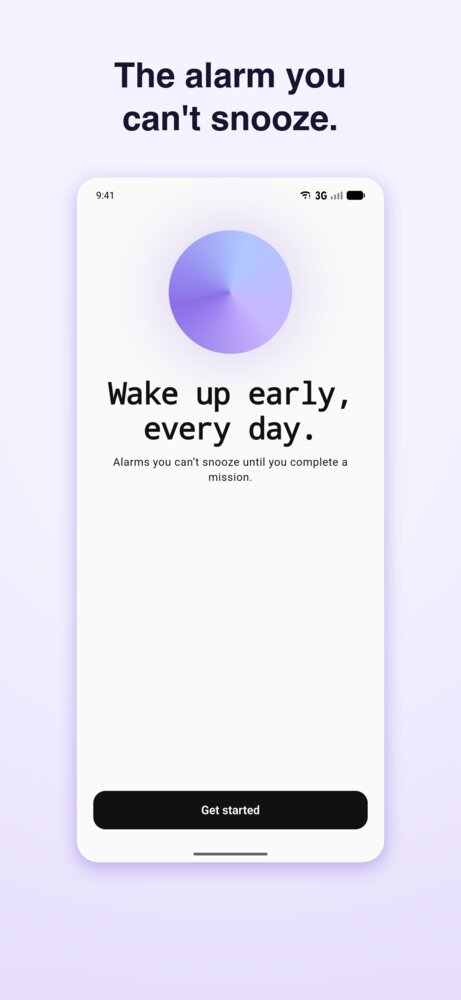
Wakey is built on the rule. There’s no snooze button. The ring screen shows the time, “Complete your mission to stop the alarm” and one button to start it. You pick one of four missions per alarm:
- Math: three problems, solved on your phone, works offline.
- Push-ups or squats: 10 reps counted by on-device pose detection, so no video leaves the phone. Optional; nobody has to exercise at 6 AM.
- Read aloud: an affirmation, checked by speech recognition.
You’re never trapped. After three failed attempts, or if a mission can’t run (say the camera or microphone permission is off), Wakey switches to math. All four missions are checked on your phone.
Try tonight Turn off snooze on tomorrow’s alarm. If you know you’ll switch it back on, pair it with fix 4.
06Give the morning a reason
“Get up” is a weak reason to get up. “Coffee I actually like” is better. So is a podcast you only allow yourself before 8. If the first ten minutes are pure dread, you’ll delay them. If something small is waiting, you’re getting up for that, not for the alarm.
Try tonight Set up tomorrow’s first good thing now: mug out, playlist queued, shoes by the door.
07Keep a streak, and make it binary
“Most days” quietly gives you permission to skip any given day. A streak doesn’t. Each morning is a win or a loss, and a loss resets the count. One lie-in stops being free.
A calendar and a pen do the job. In Wakey, finish the alarm’s mission within 30 minutes of the alarm time, or tap Log Wake Up before it, and the day is a win. Miss that window and it’s a loss. Days with no alarm are neutral rest days. The app tracks your current and best streak, with badges from Early Riser (1 day) to Centurion (100). Break it and you start from zero, which turns out to be surprisingly motivating.
Try tonight Put a calendar where you’ll see it and mark each morning W or L. Honestly.
08Work your bedtime back from your wake time
A lot of snoozing is arithmetic. If you’re up at 6:30 after falling asleep at 1, nothing on this list will feel good. Count back from your wake time the amount of sleep that leaves you feeling okay. That’s your bedtime. Wakey’s home screen shows “Go to bed by”, set 8 hours before your alarm. Treat it as a reminder, not a prescription.
Try tonight Count back from your wake time and set a reminder for 30 minutes before that bedtime.
When it’s more than habit: talk to a clinician
If you’re giving yourself enough time in bed and still wake up exhausted, the answer isn’t a better alarm.
Worth raising with a doctorThe NHLBI suggests talking with your doctor if you often feel sleepy during the day or don’t wake up feeling refreshed and alert. The CDC says the same if you regularly have problems sleeping. Regularly sleeping through loud alarms is worth mentioning too. An app can’t diagnose or fix any of this.
Frequently asked questions
Why do I keep hitting snooze?
Mostly timing: the decision arrives in the groggy minutes after waking, when one tap feels far easier than getting up. A Stockholm University survey also found snoozing more common among younger people, evening types and people who sleep less. Moving the decision earlier helps more than willpower.
Is hitting snooze bad for you?
The evidence is mixed. A 2023 study found 30 minutes of snoozing cost habitual snoozers only about six minutes of sleep and didn’t clearly change their mood, while a small 2022 study found a snooze alarm prolonged grogginess. The bigger cost is usually practical: lost time and a rushed start. If you’re tired all the time, talk to a clinician.
Does putting your alarm across the room work?
It gets you standing, which is the hard part. The weak spot is walking back to bed, so pair it with a fixed wake time or an alarm you can’t snooze.
What is a no snooze alarm?
An alarm with no snooze button, often stopped only by completing a task such as math problems or push-ups. Wakey, coming soon to iPhone and Android, works this way and switches to math after three failed attempts, so you’re never stuck.
Wakey is an accountability and habit tool, not a medical device. If you have a sleep disorder or persistent sleep problems, talk to a qualified clinician.